
Cart
0
0.00 INR
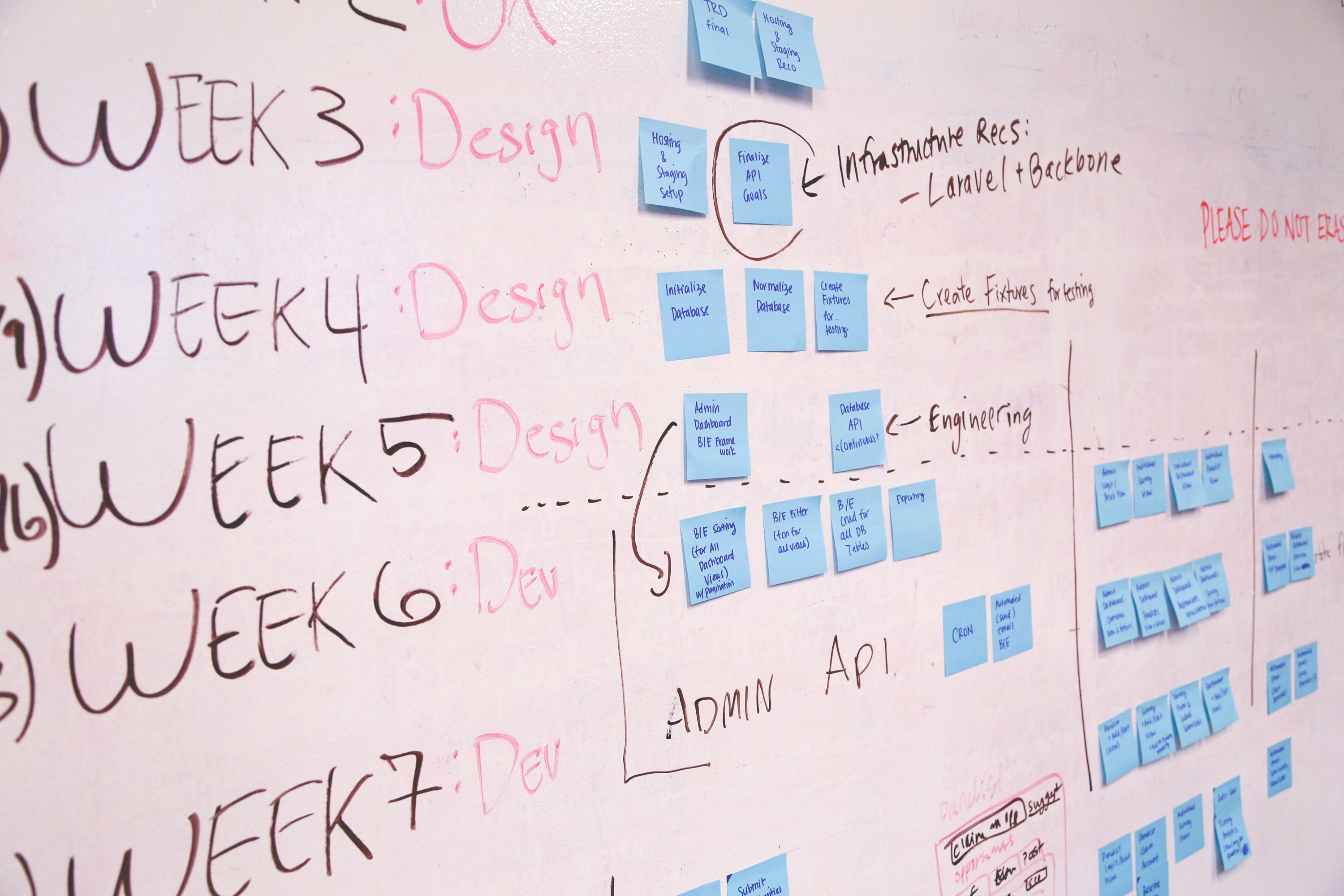
Phase IV focuses on continuously improving your AI solutions through structured iteration, feedback, and rapid delivery cycles. In this stage, models are monitored in production, performance is measured against real-world KPIs, and insights are fed back into the development loop. Our team refines data pipelines, retrains models, and updates integrations so your AI remains accurate, reliable, and aligned with evolving business needs. By combining agile practices with robust MLOps, we help you reduce risk, shorten release cycles, and unlock ongoing value from your AI investments.
This phase focuses on building, improving, validating, and delivering AI models incrementally, with strong leadership oversight and business accountability.
Phase IV answers a critical question:
How do we develop and deliver AI solutions iteratively while ensuring alignment with business objectives, risk tolerance, and value realization?
Unlike traditional software, AI systems learn from data that changes over time. Customer behavior, market conditions, and operational contexts evolve, making a one-time delivery approach ineffective.
According to the Project Management Institute, successful AI projects rely on short development cycles, frequent validation, and adaptive delivery, rather than attempting to achieve perfection in the first release.
📌 In CPMAI, iteration is not rework—it is planned learning.
In Phase IV, leaders are responsible for governing outcomes, not building models.
Leadership responsibilities include:
Defining and reaffirming business success criteria
Approving iteration goals and priorities
Balancing experimentation with risk controls
Ensuring ethical, regulatory, and organizational alignment
Sponsoring learning while maintaining accountability
📌 CPMAI exams emphasize decision-making and oversight, not technical implementation.
While leaders do not design algorithms, they must understand what type of AI model is being used and why.
Predictive models – forecasting and classification
Prescriptive models – recommendations and optimization
Generative AI models – text, code, image, or content generation
Hybrid models – combinations of multiple approaches
Each model type has a different risk profile, explainability requirement, and business impact, which must be considered during iteration.
Phase IV promotes incremental delivery, where AI capabilities are released in controlled stages.
Pilot or proof-of-value deployments
Small, frequent model improvements
Feedback-driven refinement cycles
Adaptive scope based on learning outcomes
📌 Iterative delivery reduces risk, improves stakeholder confidence, and accelerates value realization.
Validation in Phase IV goes beyond technical accuracy.
Models are evaluated against:
Defined business KPIs
Decision quality and process impact
Risk, bias, and fairness considerations
Explainability and stakeholder trust
A model that performs well technically but fails to deliver measurable business benefit does not pass CPMAI validation.
As models evolve, governance must evolve with them.
Key controls include:
Model versioning and approval checkpoints
Documentation of changes and assumptions
Ethical and compliance reviews per iteration
Clear ownership and escalation paths
📌 CPMAI treats governance as a continuous activity, not a one-time approval.
Each iteration generates learning that informs the next cycle.
Model performance results
User and stakeholder feedback
Operational and compliance observations
Changes in data or business context
This feedback loop ensures AI solutions remain relevant, trusted, and valuable over time.
By the end of Phase IV, organizations should have:
✔ Iteratively improved AI models
✔ Validation results tied to business objectives
✔ Incremental releases or pilots
✔ Risk and governance checkpoints
✔ Evidence of learning and adaptation
Treating AI delivery as a one-time release
Measuring success only by model accuracy
Ignoring feedback from business users
Weak governance during rapid iteration
AI development is iterative by design, not linear
Leaders manage value, risk, and direction—not code
Generative AI requires heightened oversight
Business validation outweighs technical optimization
Iterating Development and Delivery of AI Projects is where AI transitions from a technical experiment to a managed business capability.
CPMAI Phase IV ensures that AI solutions are continuously improved, responsibly governed, and consistently aligned with business goals, even as data and environments change.
Without disciplined iteration and leadership oversight, AI initiatives struggle to scale and sustain value.
An AI model achieves high accuracy in initial testing but fails to improve customer decision outcomes. According to CPMAI Phase IV, what should leadership do NEXT?
A. Increase model complexity
B. Deploy the model organization-wide
C. Revalidate the model against business objectives
D. Retrain the model using more data
✅ Correct Answer: C
Explanation: Phase IV prioritizes business outcome validation over technical accuracy.
Which leadership responsibility is MOST critical during Phase IV?
A. Selecting machine learning algorithms
B. Approving iterative delivery goals and risk controls
C. Writing data transformation scripts
D. Monitoring infrastructure performance
✅ Correct Answer: B
Explanation: Leaders govern value, risk, and direction, not technical implementation.
Why does CPMAI emphasize iterative delivery in AI projects?
A. AI models are easy to deploy
B. AI systems improve through continuous learning and feedback
C. Iteration reduces infrastructure costs
D. Iteration eliminates bias automatically
✅ Correct Answer: B
Explanation: AI solutions evolve as data and environments change, requiring planned iteration.
An organization plans a single, large-scale AI release after months of development. What CPMAI Phase IV risk does this approach introduce?
A. Reduced data quality
B. Limited model explainability
C. Increased delivery and adoption risk
D. Higher infrastructure utilization
✅ Correct Answer: C
Explanation: Phase IV promotes incremental releases to manage risk and learning.
Which model characteristic requires heightened leadership oversight during Phase IV?
A. Linear regression models
B. Rule-based systems
C. Generative AI models
D. Statistical dashboards
✅ Correct Answer: C
Explanation: Generative AI introduces higher risk related to unpredictability, bias, and explainability.
Which validation approach BEST aligns with CPMAI Phase IV?
A. Measuring only prediction accuracy
B. Validating models against defined business KPIs
C. Comparing algorithms for performance
D. Optimizing model training time
✅ Correct Answer: B
Explanation: Phase IV requires validation against business objectives, not just technical metrics.
A pilot AI model produces mixed results across departments. What is the MOST CPMAI-aligned next step?
A. Stop the AI initiative
B. Enforce organization-wide deployment
C. Use feedback to refine the next iteration
D. Replace the model with a new algorithm
✅ Correct Answer: C
Explanation: Phase IV relies on feedback-driven refinement.
Which activity BEST demonstrates adaptive delivery in Phase IV?
A. Finalizing requirements upfront
B. Locking model features early
C. Adjusting scope based on iteration results
D. Delaying validation until full deployment
✅ Correct Answer: C
Explanation: Adaptive delivery allows scope changes based on learning.
Who is MOST responsible for approving continued iteration or stopping an AI model in Phase IV?
A. Data scientist
B. AI engineer
C. Business sponsor and governance stakeholders
D. Infrastructure manager
✅ Correct Answer: C
Explanation: CPMAI requires business-led decision-making in Phase IV.
An AI model meets technical targets but cannot be explained to regulators or users. What should leadership decide?
A. Proceed due to high accuracy
B. Improve explainability before further delivery
C. Reduce monitoring frequency
D. Increase automation
✅ Correct Answer: B
Explanation: Explainability is a mandatory acceptance criterion.
Which risk increases if AI models are iterated without governance controls?
A. Reduced model accuracy
B. Uncontrolled changes and compliance violations
C. Increased data volume
D. Faster delivery cycles
✅ Correct Answer: B
Explanation: Phase IV requires controlled iteration with governance.
A team focuses on frequent model updates but ignores stakeholder communication. What Phase IV outcome is MOST at risk?
A. Technical performance
B. Model scalability
C. User trust and adoption
D. Infrastructure efficiency
✅ Correct Answer: C
Explanation: Adoption and trust are essential for value realization.
Which statement BEST reflects CPMAI guidance for Phase IV?
A. AI delivery should aim for a perfect first release
B. Iteration indicates poor planning
C. Iteration is a planned learning mechanism
D. Model accuracy outweighs business impact
✅ Correct Answer: C
Explanation: CPMAI treats iteration as intentional learning, not failure.
An organization wants to accelerate AI delivery by skipping pilot deployments. What CPMAI-aligned response should leadership take?
A. Approve to save time
B. Delay governance reviews
C. Require controlled pilots to manage risk
D. Outsource model development
✅ Correct Answer: C
Explanation: Pilots reduce risk and support learning.
Which outcome signals successful completion of Phase IV?
A. Deployment of a single final model
B. Completion of data preparation
C. Iteratively improved models validated against business objectives
D. Maximum possible model accuracy achieved
✅ Correct Answer: C
Explanation: Phase IV success is defined by validated, iteratively delivered AI capability.